

 027 550 0611
Tangihua Lions Lodge Conservation and Education project
for more information from the Department of Conservation about this project visit Talking about Rat and Possum Control in the Tangihua forest
 Are we making a difference?
We can now measure the success of our project.
We did a trial for rats and scored 0 rats through the stations, previously it had been about 20%
Kiwi feathers have now been found in the valley. By killing off the mustelids they can now breed successfully.
Small birds are seen in local areas where they had disappeared from, for example Tomtits, Miromiro.
We are getting 1,000s of young trees regenerating because they are not being grazed off. As you can see lots below 18 inches none above except much older trees.
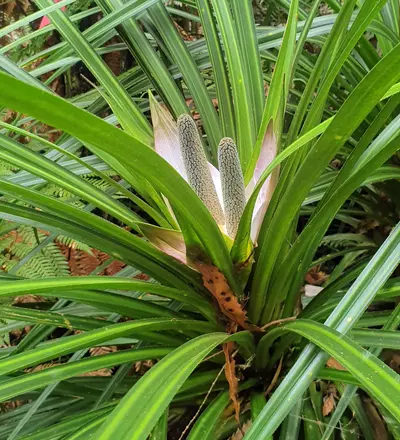
Kiekie flowers, normally rare due to being eaten by rats and possums are being found regularly.
Conservation project back ground
The Tangihua lions lodge has conservation project 400ha of DOC land and on 1200ha of farmland.
We have two projects in the same area on DOC land
Mustelid trapping: At present we have 37 bait stations, two lines checked every three weeks. We have killed over 120 mustelids so far and the DOC forest part is ramping up with in some cases 65% of the traps catching an animal when checked.
Possum and rats: We have 400 bait stations set out on 14 lines and do an annual poison in spring.
Each line (Mustelid or possum/rat) takes about 4 1/2 hours making for nice day in the bush.
Our Conservation goal in the Tangihua ranges
The forest has lost many of its plants, insects and birds. It will continue to do so unless we put in adequate pest control.
A good conservation program will result in a significant area of natural forest in the centre of Northland becoming a functional ecosystem with locally extinct species being reintroduced and able to spread elsewhere.
We have at present the capacity for 1500 students per annum. Involving schools in an active relevant, conservation program plus building a range of teaching resources will ensure the program will be sustainable. This will also positively influence future generations to not only be conservationists but to enjoy the great NZ outdoors.
 Our conservation program has achieved so far
Pest control on 450ha of Native bush surrounding the lodge
- set up a group of volunteers for the conservation part.
- cut 50km of tracks
- built and installed 430 baits stations to target Possums and Rats
- built and installed 50 Monitoring stations
- completed two poisoning programs
- put in 21 Timms traps for students to learn how to do conservation and trapping
- Built 32 double DOC 200 traps for mustelids – half the traps supplied by the NRC and set them out.
Worked with local farmers and the Northland Regional Council to set up the Tangihua Community Pest Control Area (TCPCA) which is 1100ha of pest control on farm land bounding the DOC land where the lodge is.
Conservation Funding, expertise and labour sources
- World Wide Funding WWF $15000
- Kiwis for kiwi $2000
- Probably about $80,000 plus from Northland Regional Council. They and their staff have been fantastic on many fronts
- At least $10,000 from DOC – no money but lots of action and expertise. We have found the DOC staff as always a great help to the lodge and conservation project
- Mid Western Lions $6000
- volunteers 750 hours at $30 an hour $22,500
- Students from schools have been involved in trapping, setting out stations and setting up monitoring.
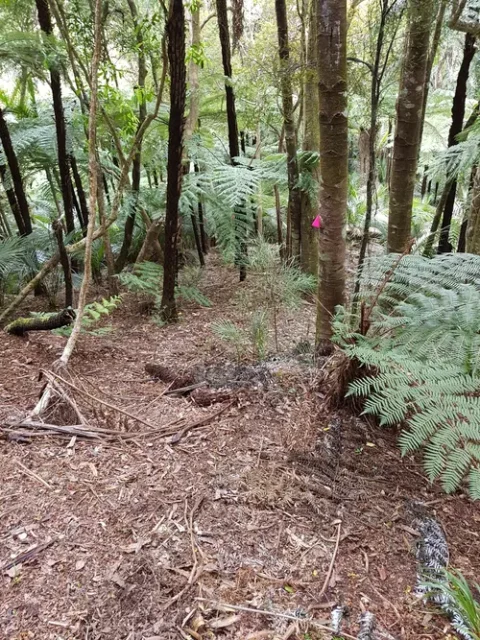
Typical of large areas of the forest. There is no lower or mid canopy. This means there is no habitat for birds or insects. Native plants are unable to establish and the forest can not regenerate.
Back ground to the Tangihua Lions Lodge Conservation project
in late 2015 a group of Tangihua lions lodge trustees were sitting on a ridge, in the Tangihua ranges, deciding on some new tracks when a comment was made.
There are more native birds in our back gardens than in this forest .
We realized that the only birds we had seen were a pigeon and a fantail plus we had heard a couple of Tui in the distance.
Most people scoff when we say this. But when they go for a walk on the tracks around the lodge they are shocked to find it is true.
The Tangihua forest is rated highly by Conservation agencies
The Tangihua Forest is typical of the Northland forests, most of which have disappeared. The forest provides habitat for three threatened plant species and 22 regionally significant plant species.
- it is identified as a Level 1 site by the Protected Natural Areas Programme as containing significant vegetation and/or significant habitats of indigenous fauna.
- Nationally ranked at no. 356 in DOCs Natural Heritage Management System – a higher ranking than Waipoua Forest!
- Is now one of the only major forests without Kauri Dieback making it a very important ecosystem
The status of many of the native animals is
| Locally extinct | Functionally extinct | Serous decline | Gradual decline |
|---|---|---|---|
| Red-crowned Kakariki Yellow-crowned Kakariki Bellbird Kokako Rifleman North Island Robin |
North Island Brown Kiwi Kaka |
Pigeon – Kereru Tomtit – Miromiro Fantail Pekepeka long tailed bat Forest Geckos |
Kauri snail Amborhytida forsythi Koura fresh water Cray fish Longfin eel shortjaw kokopu banded kokopu Morepork- Ruru Tui Pukeko Kingfisher Shining Cuckoo Grey warbler |
We set the goal
To create a high quality, accessible educational centre surrounded by a fully restored Ecosystem.
This will result in a significant area of natural forest in the centre of Northland becoming a fully functional ecosystem with locally extinct species being reintroduced and able to spread elsewhere.
We have at present the capacity for 1500 students per annum. Involving schools in an active relevant, conservation program plus building a range of teaching resources will ensure the program will be sustainable. This will also positively influence future generations to not only be conservationists but to enjoy the great NZ outdoors.

Volunteers assembling possum and rat bait stations to cover 450 ha with funding from World Wide Funding (WWF)
How we are achieving this
The Tangihua Lions Lodge Trust has identified four key areas
- Education
- Pest control
- Community involvement
- Building relationships with NGOs, Govt departments and local councils for resources and expertise.
Education and pest control although separate projects will be closely integrated and run simultaneously. Community involvement refers to volunteers, local farmers and any other group which is interested.
The biggest issue is eradicating introduced pests and preventing disease.
To allow the forest to regenerate we must tackle the introduced pests and diseases.
These include (Follow the links for more information and what we have put in place)
Pests
Feral Cats, Goats, Possums, Rats, Mustelids, Wasps
Diseases
Additional information about pest control
Bait stations and traps, monitoring
Volunteers

Volunteers play a very important role as they have in other projects such as this.
They enable us to
- Achieve significantly more than other wise
- Allows people who may not otherwise, be able to get involved in conservation to be involved
Many of our volunteers just like a good day in the bush tramping with friends.
We have a good team of volunteers who have put in 750 hours. This is valued at $30 an hour which totals $22,500.
for more information about our volunteers visit Volunteers who make a lasting difference.
Tangihua Community Pest Control Area
For more information click here Tangihua Community Pest Control Area
Picture ; Tauraroa Area School shooting team working with Regional Council Contractor Dwayne to assemble Mustelid traps at the lodge .
This covers 1,100ha on land surrounding the Tangihua Forest and involves the Northland Regional Council and local farmers.
We have laid out mustelid traps and bait stations and had several very successful poisons
 Conservation Education
Education is an essential part of the project. It is crucial we invest in future generations to ensure continuation.
It is not only essential to make future generations aware of the need for conservation but also there are now a variety of careers which can be based around conservation.
These not only lead to DOC or the Regional Council jobs by studying environmental type subjects but also includes Engineers focused on preventing effluent from reaching our harbours.
Environmental agencies need accountants, administrators, lawyers builders and many other types of professionals.
A continuous source of Volunteers are essential now and in 30 years time. These may well be people whose careers never involve the environment but at some stage wish to put something back
Unique opportunity
The lions lodge and this conservation project provides a number of unique opportunities.
- We are starting from fresh and can document everything we do, providing an important source of information for teachers
- We can provide a hands on experience for students
- We have the lodge already set up for schools etc
Goal
To provide teachers with a wide variety of teaching options ranging from the hands on to the on line.
this would include
- Build and provide educational resources based on the Standard New Zealand Curriculum for years 5 to 13
- Build and provide educational resources based for Te Marautanga O Aotearoa (the Maori curriculum for teaching in te reo)
- Provide on-line resources for teachers
Issue.
We require a teacher or educator to outline the project so we can apply for funding. Once we have the funding we will then commence all aspects of project.
I and members of the lodge trust are not teachers or educators and so need to delegate this part of the project.
As part of Lions and other organizations there is substantial funding for this project but we must first of all be able to present a satisfactory and viable teaching programme to attract the funding.
What we have achieved so far
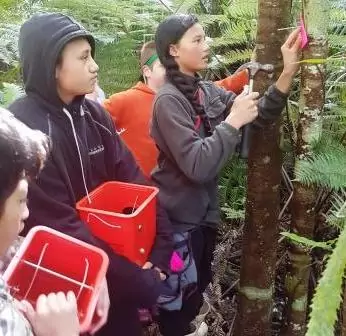
We have involved schools in building and setting out bait stations plus trapping.
We have set up
- This website
- trapping lines for schools
- monitoring lines for schools, Possums and Rats and bird monitoring stations
- Teaching resources for schools


